
When it comes to automotive window tint, not all films are created equal. While many drivers associate tinted windows with a darker appearance, increased privacy and reduced glare, the technology behind the film can make a significant difference in how well it performs.
Two vehicles can have windows that look nearly identical from the outside, yet one may provide substantially better heat rejection and interior comfort than the other.
For drivers in Columbia and surrounding South Carolina communities, where summer temperatures and intense sunshine can make vehicle interiors uncomfortable, choosing the right window tint is about much more than appearance.
Understanding the difference between regular window tint and ceramic window tint can help you decide which option makes the most sense for your vehicle, driving habits and budget.
What is regular window tint?
Traditional automotive window tint typically uses dyed film to darken the glass and reduce the amount of visible sunlight entering a vehicle.
Dyed window films are generally among the most affordable options available. They provide a darker appearance, increased privacy and some reduction in glare, making them popular with drivers who primarily want to change the look of their vehicle.
However, not all regular window films provide the same level of heat rejection.
Basic dyed films primarily absorb portions of incoming sunlight rather than using more advanced technology to reject infrared energy. While they can reduce some solar heat, their performance is generally more limited than that of premium ceramic films.
Lower-quality dyed films may also experience fading, discoloration or deterioration over time, particularly when exposed to years of intense sunlight.
It’s important to understand that regular window tint isn’t necessarily bad. A quality carbon-based window film can provide dependable performance, lasting color stability and meaningful heat reduction without the higher price of premium ceramic tint.
What is ceramic window tint?
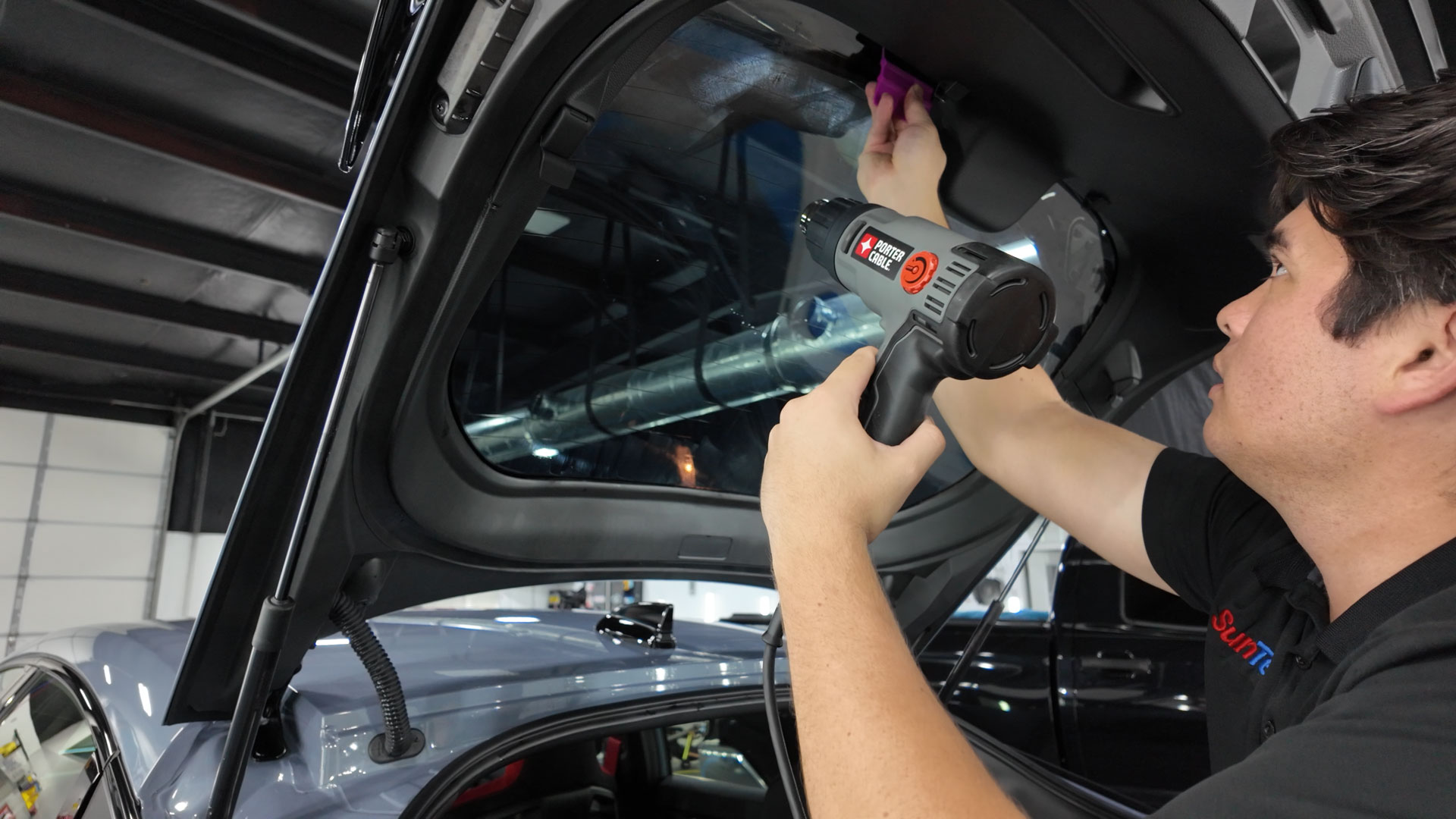
Ceramic window tint uses advanced, non-metallic ceramic particles within the film to help control solar energy passing through automotive glass.
Unlike traditional dyed films, premium ceramic tint is engineered to reject substantial amounts of infrared radiation, a major contributor to the heat you feel from sunlight.
This allows ceramic film to provide greater heat protection without necessarily requiring an extremely dark appearance.
For example, a lighter ceramic film may reject more solar heat than a significantly darker basic dyed film.
Ceramic window tint also provides several additional benefits:
- Excellent infrared and solar heat rejection
- Protection against harmful ultraviolet (UV) radiation
- Reduced glare from direct sunlight
- Greater interior comfort during hot weather
- Protection against fading and deterioration of interior materials
- Long-lasting color stability
- Non-metallic construction that avoids the signal interference associated with some metalized films
For drivers who spend considerable time commuting, frequently park outdoors or simply want a more comfortable vehicle, ceramic window tint can be a worthwhile upgrade.
Darker window tint doesn’t necessarily mean better heat rejection
One of the biggest misconceptions about automotive window tint is that darker film automatically provides better heat protection.
While darker tint generally blocks more visible light, darkness and heat rejection are two different measurements.
Window tint darkness is measured using visible light transmission (VLT), which represents the percentage of visible light that passes through the glass and film.
For example:
- 70% VLT: Allows approximately 70% of visible light through, resulting in a relatively light appearance.
- 50% VLT: Allows approximately half of visible light through.
- 35% VLT: Provides a noticeably darker appearance while still allowing a substantial amount of visible light through.
- 20% VLT: Creates a darker appearance with increased privacy.
- 5% VLT: Commonly called limo tint, allowing very little visible light through.
These percentages describe the film’s light transmission, not its ability to reject heat. Actual transmission through the finished window also depends on the factory glass.
A premium ceramic film with 50% VLT may provide better overall heat rejection than a basic dyed film with 20% VLT, depending on their respective performance specifications.
That’s why choosing window tint based entirely on how dark it looks can be misleading.
The technology inside the film matters just as much as its appearance.
Understanding infrared rejection and total solar energy rejection
When comparing window tint products, you’ll often encounter two important performance measurements: infrared rejection (IRR) and total solar energy rejection (TSER).
Although both relate to heat protection, they measure different things.
Infrared rejection (IRR) describes how effectively a film rejects infrared radiation within a specified range of wavelengths. Because infrared radiation contributes to the heat you feel from sunlight, higher infrared rejection can make a noticeable difference in comfort.
However, infrared rejection percentages can vary depending on the wavelengths used during testing. A product advertising extremely high infrared rejection does not necessarily reject that same percentage of all solar heat.
Total solar energy rejection (TSER) provides a broader measurement of how much incoming solar energy is rejected by the glass and film combination. It accounts for solar energy across ultraviolet, visible and infrared wavelengths.
TSER is often one of the more useful measurements when comparing overall heat-control performance.
For the most accurate comparison, look at the manufacturer’s specifications for the particular film and shade you’re considering rather than relying on a single advertised percentage.
Why ceramic tint makes a difference during South Carolina summers
Anyone who has parked a vehicle outside during a South Carolina summer knows how quickly the interior can become uncomfortable.
Sunlight enters through the windows, where solar energy is absorbed by seats, dashboards, carpeting and other interior surfaces. Those materials warm up and transfer heat into the surrounding cabin.
Even when the outside temperature is relatively moderate, a vehicle parked in direct sunlight can become extremely hot.
Window tint cannot eliminate this heat buildup entirely, but high-performance films can help reduce the amount of solar energy entering the cabin.
The benefits can be particularly noticeable when:
- Parking outside at work or home
- Driving during the hottest afternoon hours
- Traveling long distances on I-26, I-20 or I-77
- Sitting in traffic during the summer
- Driving vehicles with large glass areas
- Trying to reduce direct sunlight on passengers
By reducing incoming solar heat, ceramic tint can help the cabin feel more comfortable and make it easier for the air-conditioning system to maintain the desired temperature.
The vehicle can still become hot when parked for extended periods, but reducing incoming solar energy provides an important additional layer of protection.

Ceramic tint helps protect your vehicle’s interior
Heat isn’t the only concern when it comes to prolonged sunlight exposure.
Ultraviolet radiation and other components of sunlight can gradually contribute to deterioration of interior materials, including dashboards, leather seats, upholstery and plastic trim.
Over time, repeated exposure may lead to:
- Fading and discoloration
- Drying and cracking of certain materials
- Premature aging of interior surfaces
- Deterioration of upholstery and trim
- Uneven discoloration in areas exposed to direct sunlight
High-quality automotive window films can block more than 99% of harmful UV radiation, helping reduce UV exposure for passengers and interior surfaces.
However, UV protection is not exclusive to ceramic tint. Many quality carbon and other automotive films also provide excellent UV rejection.
The greater advantage of premium ceramic film is its ability to combine strong UV protection with advanced heat rejection.
For drivers planning to keep their vehicles for many years, reducing both UV exposure and solar heat can help preserve the condition and appearance of the interior.
Does ceramic window tint interfere with electronics?
Some older and metalized window films contain metallic materials that can interfere with certain radio-frequency signals.
Depending on the vehicle and film construction, this can potentially affect GPS reception, cellular connectivity, satellite radio or other wireless systems.
Modern ceramic window tint avoids this concern by using non-metallic technology.
The same is true of many quality carbon-based window films.
At Clean Image, the SunTek window tint products we install use non-metallic construction, allowing drivers to enjoy heat protection without the signal interference associated with metalized tint.
This makes both our ceramic and carbon film options suitable for modern vehicles equipped with advanced electronics and connectivity features.
Ceramic window tint vs. carbon window tint
While ceramic and traditional dyed films are frequently compared, carbon window tint deserves consideration as well.
Carbon-based window films offer an attractive middle ground between inexpensive dyed tint and premium ceramic technology.
Unlike basic dyed films, quality carbon films are designed for better color stability and more dependable long-term performance.
They can provide excellent glare reduction, UV protection, privacy and meaningful heat rejection at a more economical price.
Ceramic films, on the other hand, generally offer stronger infrared heat rejection, especially when comparing high-performance products.
The choice ultimately depends on what matters most to the vehicle owner.
If your primary goal is appearance, privacy and dependable everyday performance, carbon tint may be an excellent option.
If your priority is maximizing heat rejection and interior comfort, ceramic tint is generally the better choice.
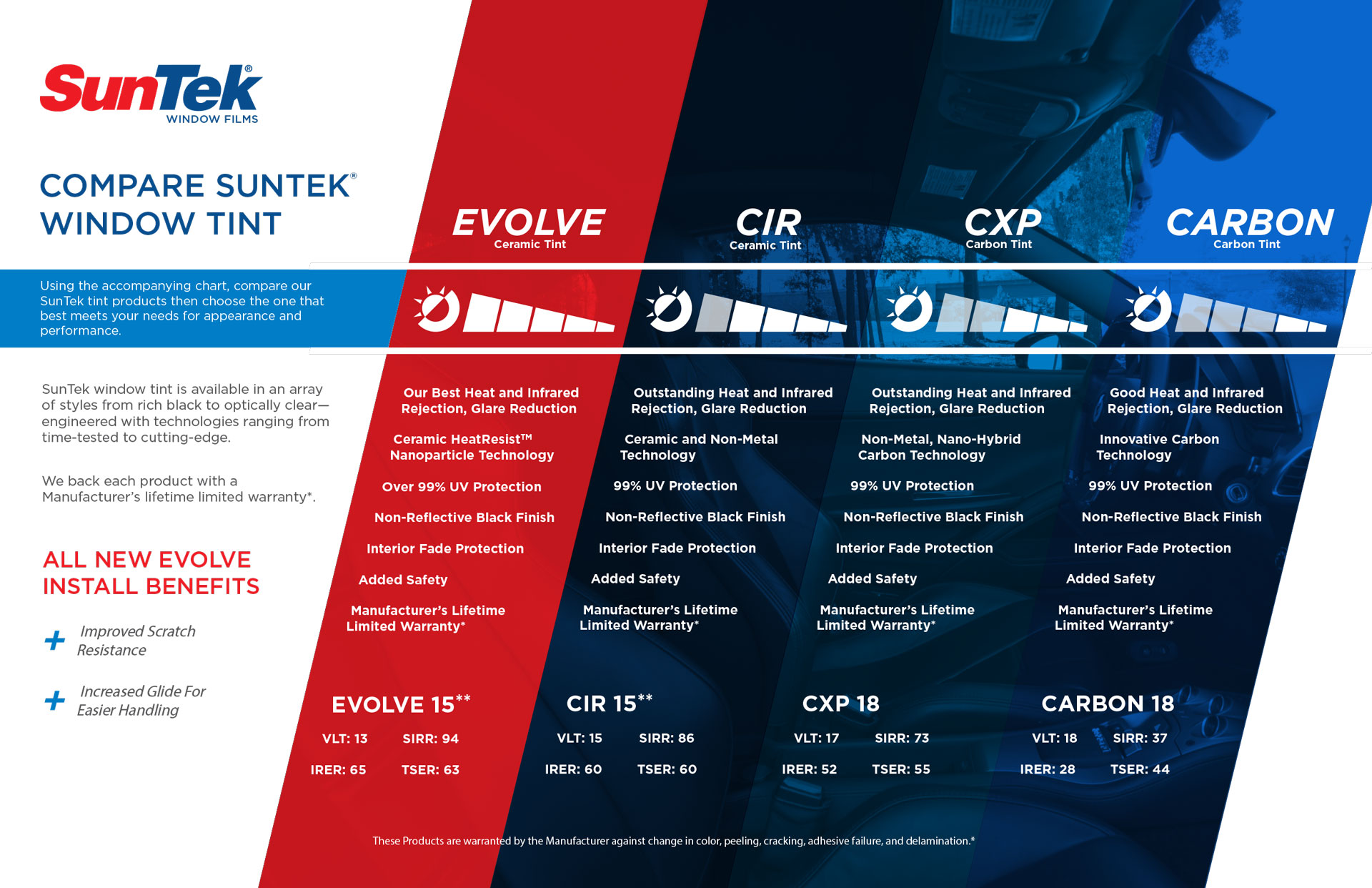
Comparing SunTek’s ceramic and carbon window tint options
At Clean Image, we install premium SunTek window films designed to provide different levels of performance and value.
Rather than offering a one-size-fits-all solution, we provide several options depending on your priorities and budget.
SunTek Evolve: Premium ceramic performance
SunTek Evolve is our premium ceramic window tint option, engineered to deliver exceptional infrared heat rejection and cabin comfort.
Using advanced ceramic technology, Evolve offers infrared rejection of up to 94%, depending on the selected film and applicable performance measurement.
It also provides excellent UV protection, glare reduction and long-term color stability.
For drivers who frequently park outdoors, spend long hours on the road or want maximum protection against South Carolina’s intense summer sunshine, Evolve offers our highest level of heat-control performance.
SunTek CXP: Enhanced carbon performance
SunTek CXP, or Carbon Extra Performance, uses advanced nano-hybrid carbon technology to provide improved infrared and solar heat rejection compared with standard carbon film.
It offers an excellent balance between heat protection, appearance and cost.
CXP is a strong option for drivers who want more performance than a standard carbon film without moving to the premium ceramic category.
SunTek Carbon: Dependable everyday protection
SunTek Carbon provides a cost-effective solution for drivers looking for a clean, non-reflective appearance, privacy, glare reduction and reliable solar protection.
Its carbon construction is designed for lasting color stability and helps avoid the fading and discoloration associated with some inexpensive dyed films.
For customers who want a quality professional installation without the higher cost of advanced heat-rejection films, SunTek Carbon is an excellent starting point.
You can explore all three options on our automotive window tint service page.
Is ceramic window tint worth the additional cost?
For many South Carolina drivers, the answer is yes, particularly when heat rejection is a major priority.
Ceramic tint generally costs more because of the advanced materials and manufacturing technology used to achieve its performance.
However, the additional cost can provide benefits that you’ll appreciate every time you drive.
Ceramic tint may be especially worthwhile for:
- Drivers who frequently park outside
- Daily commuters spending extended time on the road
- Families transporting children or passengers sensitive to heat and glare
- Owners of vehicles with large windows or panoramic glass roofs
- Drivers who want strong heat rejection without extremely dark tint
- Owners of luxury vehicles or vehicles they plan to keep long-term
- Anyone seeking maximum cabin comfort during hot weather
That doesn’t mean everyone needs the most expensive ceramic film available.
For some drivers, a quality carbon tint provides the right balance of performance, appearance and affordability.
The important thing is understanding what you’re paying for and choosing a film based on actual performance rather than marketing claims or darkness alone.
Choosing the right window tint shade in South Carolina
Regardless of which film technology you choose, selecting the appropriate shade is equally important.
South Carolina regulates automotive window tint based on factors including visible light transmission, reflectivity, window location and vehicle classification.
These requirements can vary depending on the type of vehicle and which windows are being tinted.
It’s also important to consider nighttime visibility. Extremely dark tint can make it more difficult to see pedestrians, obstacles and surrounding traffic on poorly illuminated roads.
One advantage of high-performance ceramic tint is that you can achieve substantial heat rejection while maintaining a lighter appearance.
This makes it possible to prioritize comfort without automatically choosing the darkest available film.
A professional installer can explain the available options and help you select a film that balances appearance, heat protection, visibility and applicable state regulations.
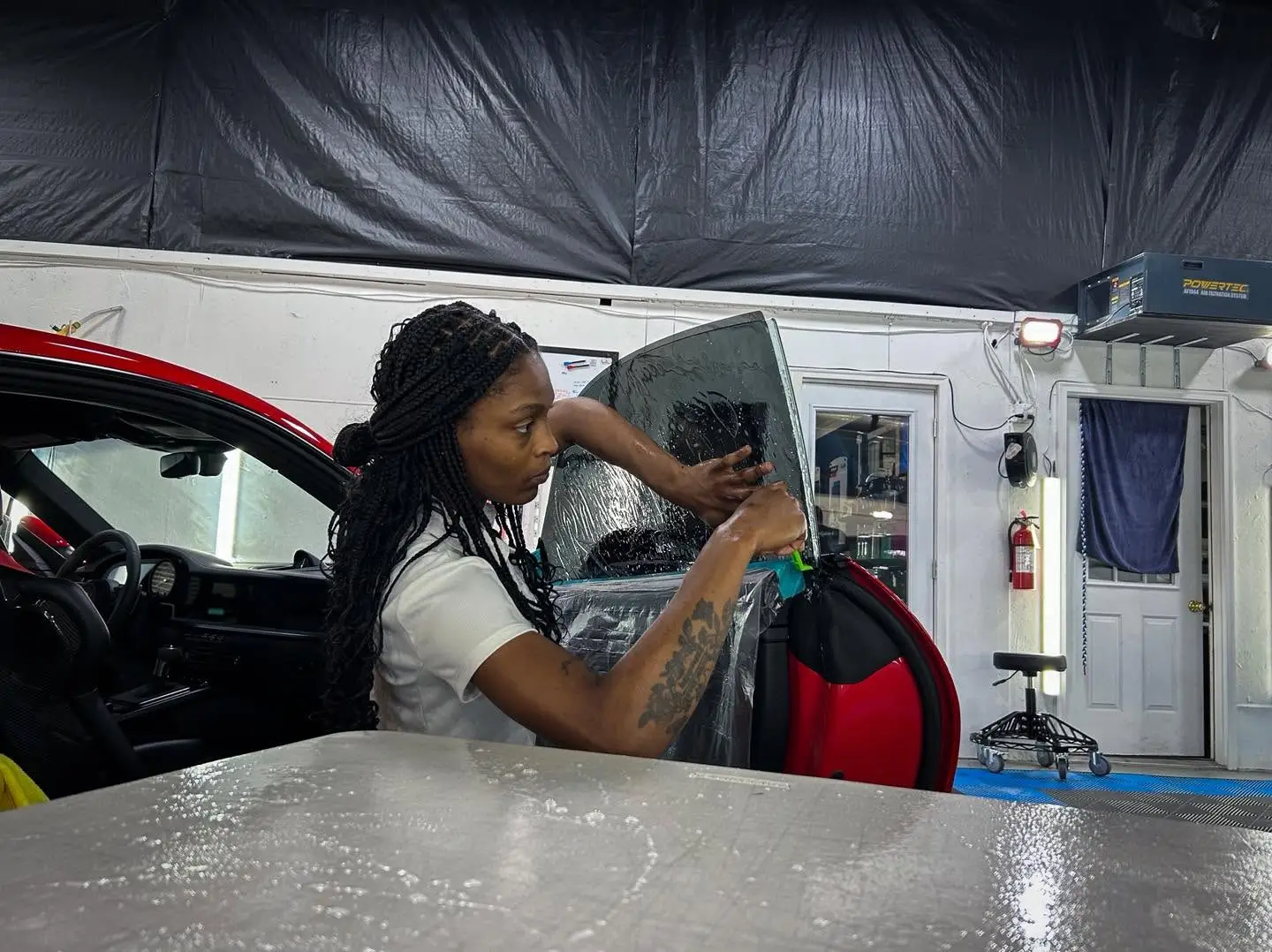
Professional installation matters just as much as film quality
Even premium ceramic window tint can deliver disappointing results if it isn’t installed correctly.
Proper glass preparation, precise film fitting and careful installation are essential for achieving a clean, uniform appearance.
Poor installation can result in trapped contaminants, visible debris, uneven edges, creases, bubbles or premature film failure.
At Clean Image, we use professional installation techniques and high-quality SunTek window films to deliver a smooth, factory-style finish.
Our team can help you compare film options, choose appropriate shades and determine which windows will benefit most from additional protection.
For more information on the advantages of tinting your vehicle in our climate, read our article on why every driver in Columbia, SC needs window tint.
Upgrade your driving comfort with Clean Image
When comparing ceramic window tint versus regular window tint, the biggest difference comes down to performance.
Traditional dyed films primarily provide a darker appearance, privacy and glare reduction. Quality carbon films improve on those benefits with better color stability and heat-control performance.
Premium ceramic window tint takes things further by providing advanced infrared rejection and greater solar heat protection without requiring an excessively dark shade.
Whether you’re interested in our SunTek Carbon, CXP or premium Evolve ceramic film, we’ll help you choose the right combination of comfort, protection, appearance and value.
Contact Clean Image today to request a quote or learn more about our professional window tint services.